Table of Contents
ToggleBuilding an eclectic bedroom isn’t about throwing together random furniture and hoping for the best. It’s a deliberate approach to mixing design styles, periods, and textures in a way that feels intentional rather than chaotic. Unlike single-style rooms that follow strict aesthetic rules, eclectic spaces give homeowners the freedom to showcase personality while creating a cohesive environment. The key is understanding which elements tie disparate pieces together and which combinations create visual tension instead of harmony. Done right, an eclectic bedroom becomes a reflection of collected experiences, travel finds, and inherited treasures, not a furniture showroom.
Key Takeaways
- Eclectic bedroom decor requires intentional mixing of styles, periods, and textures rather than random assortment—unify disparate pieces through a cohesive color palette, consistent materials, or deliberate contrast.
- Establish 2-3 base colors repeated throughout the room, layer textures in odd numbers with varied scales, and follow the three-scale pattern rule (one large, one medium, one small) to prevent visual chaos.
- Anchor your eclectic bedroom with statement furniture, layered lighting at multiple heights, strategically mixed textiles, curated wall art, and natural elements that prevent the space from feeling over-styled.
- Source furniture from multiple outlets (vintage, thrift stores, retail) and test combinations before committing; maintain proportional balance, coordinate wood tones within similar warmth ranges, and leave at least 36 inches of clearance around the bed.
- Avoid overloading surfaces with decor, ignoring room architecture, matching elements too precisely, and forcing incompatible styles—focus on functional storage, adequate task lighting (400-500 lumens), and leaving visual breathing room to prevent the space from feeling cluttered.
What Is Eclectic Bedroom Decor?
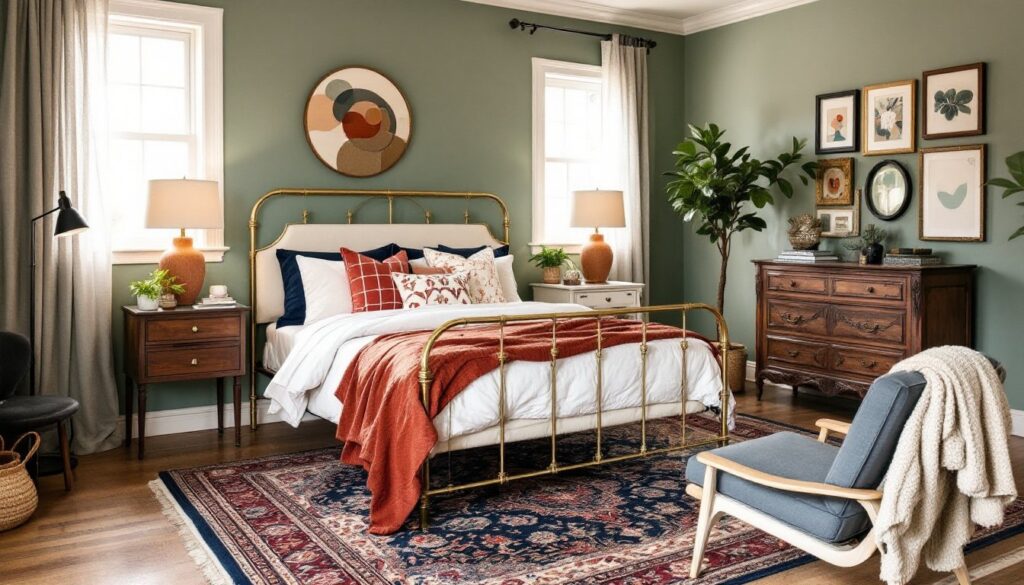
Eclectic bedroom decor pulls elements from multiple design styles and time periods into one space. Rather than committing to a single aesthetic like mid-century modern or farmhouse, eclectic design allows a vintage brass bed frame to coexist with contemporary nightstands, or a traditional Persian rug to anchor a room with Scandinavian-inspired furniture.
The distinguishing factor is intentionality. Random assortments of mismatched furniture read as cluttered or unfinished. Eclectic rooms require a unifying thread, whether that’s a repeated color, consistent material choices, or a deliberate contrast in scale and proportion. Think of it as curated chaos: every piece serves a purpose and relates to the whole.
This approach works particularly well in bedrooms because the space naturally accommodates layered textiles, varied lighting sources, and personal collections. Unlike high-traffic areas that benefit from visual simplicity, bedrooms can handle more complexity without feeling overwhelming. The result is a room that tells a story rather than following a catalog layout.
Eclectic bedroom ideas often emerge organically as homeowners acquire furniture over time, but the best executions involve strategic editing. Not every thrift store find or family heirloom deserves wall space. Successful eclectic design means choosing pieces that genuinely resonate while maintaining visual balance across the room.
Key Principles for Mixing Styles Successfully
Mixing design styles without creating visual chaos requires following foundational principles that create cohesion. These aren’t rigid rules, eclectic spaces thrive on breaking convention, but they prevent a room from feeling like a garage sale.
Create a Cohesive Color Palette
Color acts as the primary unifying element in eclectic bedroom design. Without it, disparate furniture styles and patterns compete for attention rather than complementing each other.
Start with a base palette of 2-3 colors that appear throughout the room in varying intensities. These might be neutrals like charcoal, cream, and warm brown, or bolder choices like navy, rust, and sage. The key is repetition: if the headboard fabric includes coral, echo that shade in throw pillows, artwork matting, or a table lamp base.
Accent colors can be introduced in smaller doses through accessories, but limit these to 1-2 additional hues to maintain coherence. A room mixing jewel tones, pastels, and earth tones simultaneously will struggle to feel unified regardless of how well the furniture styles blend.
Paint provides an opportunity to tie everything together. A single wall color throughout creates continuity, even when furniture pieces span different eras. If using wallpaper or an accent wall, pull colors from that pattern into textiles and decor elsewhere in the space.
Natural materials offer another way to build color harmony. Wood tones don’t need to match perfectly in eclectic bedroom decor, but keeping them within a similar temperature range, all warm honey tones or all cool grays, prevents visual discord. Mixing a weathered pine dresser with a mahogany bed frame works when both lean warm: pairing dark walnut with bleached oak creates jarring contrast.
Balance Different Textures and Patterns
Texture and pattern diversity define eclectic spaces, but too much variety creates sensory overload. The goal is deliberate contrast, not random accumulation.
Layer textures in odd numbers and vary the scale. A chunky cable-knit throw, smooth linen duvet, and nubby wool rug create depth without competing. Stick to different tactile experiences: if you’ve got a velvet headboard, skip velvet pillows and choose something with visual or physical texture like embroidered cotton or raw silk.
Pattern mixing follows the rule of three scales: combine one large-scale pattern (oversized florals, bold geometric wallpaper), one medium pattern (standard stripes, medium florals), and one small pattern (tiny dots, fine checks). This prevents patterns from visually merging or clashing.
Maintain at least one solid element between patterns. If the duvet features a busy print, keep the headboard fabric solid. If both the rug and curtains have pattern, upholster a bench or chair in a complementary solid to give the eye a resting place.
Metallic finishes count as texture. Mixing brass drawer pulls, a wrought iron bed frame, and chrome lamps adds visual interest, but limit metallic finishes to 2-3 types to avoid a hardware store aesthetic. Choose finishes with similar undertones, warm metals like brass, copper, and gold work together: cool metals like chrome, nickel, and pewter pair well.
Essential Elements to Include in Your Eclectic Bedroom
Certain elements anchor eclectic bedroom design and provide structure for mixing styles. These components create focal points and layers that make the room feel intentional.
Statement furniture piece: Every eclectic bedroom needs one standout item that sets the tone. This might be an ornate vintage headboard, a boldly upholstered accent chair, or an unusual dresser with character. This piece doesn’t need to match anything else, it’s the starting point around which other elements revolve. Choose something with visual weight or unique detailing that can hold its own against contrasting styles.
Layered lighting: Eclectic spaces benefit from multiple light sources at different heights. A chandelier or pendant provides ambient lighting, table lamps on nightstands offer task lighting, and sconces or floor lamps add accent lighting. Mixing lighting styles, like pairing an industrial metal pendant with traditional ceramic table lamps, reinforces the eclectic approach. Just ensure bulb temperatures are consistent across fixtures to avoid color cast issues (stick with 2700K-3000K warm white for bedrooms).
Textiles and soft furnishings: Bedding, curtains, throws, and pillows allow for layering patterns and textures without permanent commitment. These elements are also the easiest to swap seasonally or as tastes evolve. Use the bed as a focal point for textile mixing: start with solid sheets, add a patterned duvet, layer a contrasting throw at the foot, and finish with pillows in varying sizes and fabrics. Window treatments should complement rather than match, if the bedding is busy, keep curtains simple in a coordinating solid.
Art and wall decor: Eclectic walls often feature gallery-style arrangements mixing framed art, mirrors, wall sculptures, and textiles. The key to cohesive gallery walls is consistent framing or matting colors, even when the artwork styles vary. Alternatively, lean large pieces against the wall on dressers or shelving for a more casual, collected look. Designers on sites focused on interior trends often recommend limiting wall arrangements to odd numbers of pieces for visual balance.
Natural elements: Plants, woven baskets, and raw wood accessories ground eclectic spaces and prevent them from feeling overly styled. A potted fiddle-leaf fig, hanging macramé planter, or driftwood sculpture adds organic texture that complements rather than competes with other design elements. These pieces also bridge style gaps, a rattan basket works equally well in bohemian and coastal settings.
How to Source and Combine Furniture Pieces
Building an eclectic bedroom requires strategic sourcing rather than buying a matched bedroom set from a single retailer. The goal is collecting pieces with individual character that relate through shared design DNA.
Start with anchor pieces: Identify the largest or most visually dominant items first, typically the bed frame, dresser, and any seating. These set the room’s tone and establish the initial style mix. A mid-century platform bed might pair with a restored Victorian dresser and a modern upholstered bench. Before buying secondary pieces, photograph the anchors and keep images handy when shopping to assess compatibility.
Shop multiple sources: The best eclectic bedroom ideas come from mixing retail, vintage, and custom pieces. Estate sales and auctions yield solid wood furniture from earlier eras that’s often better constructed than contemporary options. Thrift stores and consignment shops offer budget-friendly pieces that can be refinished or reupholstered. Retail stores fill gaps with contemporary items that balance older pieces. Online marketplaces like Facebook Marketplace and Craigslist are goldmines for unique finds, but inspect furniture in person for structural soundness, check drawer glides, joint stability, and veneer condition.
Consider scale and proportion: Furniture pieces don’t need to match, but they should relate proportionally. Pairing a massive carved oak bed with delicate mid-century hairpin-leg nightstands creates imbalance. Ensure nightstands are roughly 24-28 inches tall (or within 2-4 inches of mattress height) for functional bedside access, regardless of style. Leave at least 36 inches of clearance around the bed for comfortable movement, a common mistake is cramming too many statement pieces into insufficient space.
Refinish and reupholster strategically: Vintage furniture often needs updating to fit a cohesive color palette. A coat of paint in a unifying color can help disparate wood pieces relate to each other. Water-based furniture paint (like those in the chalk paint or milk paint categories) adheres well to most surfaces with minimal prep, though sanding is still recommended for durability. Reupholstering a vintage chair in contemporary fabric bridges style periods. Both tasks are manageable DIY projects if you’ve got basic tools, an orbital sander, paintbrushes, and a staple gun cover most refinishing needs. Professional upholstery makes sense for complex pieces with springs or intricate detailing.
Test combinations before committing: Use painter’s tape to mark furniture footprints on the floor before arranging pieces. This prevents the common mistake of buying furniture that’s too large or awkwardly proportioned for the room. Bedroom layouts typically benefit from symmetry around the bed even when furniture styles are mismatched, flanking the bed with nightstands (even if they don’t match each other) creates visual balance.
When mixing furniture woods, the rule is similar warmth or similar finish rather than exact matching. A raw oak dresser works with a walnut bed if both have matte natural finishes. Glossy cherry next to distressed pine creates disconnect. Many design inspiration platforms showcase successful furniture combinations across various styles, providing visual references for compatible pairings.
Common Mistakes to Avoid When Going Eclectic
Eclectic bedroom design offers creative freedom, but that flexibility creates opportunities for missteps that undermine the intentional aesthetic.
Overloading the space: The biggest error is treating eclectic as permission to display everything at once. Just because you can mix styles doesn’t mean every surface should hold a decorative object. Visual breathing room is essential, leave some wall space bare, keep nightstands relatively clear, and resist filling every corner with furniture. A good benchmark: if more than 60% of surfaces hold decorative items, the room likely feels cluttered rather than curated.
Ignoring room architecture: Eclectic furnishings should work with the room’s bones, not fight them. Installing ultra-modern furniture in a home with ornate crown molding and traditional trim creates discord unless bridged by transitional pieces. Similarly, forcing cottage-style elements into a loft with exposed ductwork and concrete floors requires careful balance. Acknowledge the room’s architectural context and choose at least some pieces that complement it.
Skipping a unifying element: Without something tying the room together, eclectic reads as random. This is often a color palette issue, but it can also be a lack of repeated shapes, materials, or motifs. If there’s no common thread across furniture, textiles, and decor, step back and identify what can create connection, even something as simple as brass hardware across all wood pieces or a repeated curved line in the headboard, mirror, and lamp bases.
Matching too much: Ironically, trying to coordinate everything undermines eclectic design. Matching wood finishes exactly, buying all textiles from one collection, or keeping every metal finish identical creates a conventional room, not an eclectic one. Embrace intentional mismatch, different nightstands flanking the bed, varied picture frame finishes, mismatched throw pillows in complementary fabrics. Much of what makes creative home styling work is the contrast between elements.
Forcing incompatible styles: Some design styles naturally blend: others clash regardless of execution. Ultra-minimalist Scandinavian and maximalist Victorian rarely coexist successfully. Heavy Mediterranean furniture fights against delicate French provincial pieces. Before committing to a combination, look at examples of eclectic spaces to see which style pairings create harmony. Generally, styles that share either similar color palettes, comparable visual weight, or related time periods work better together.
Neglecting scale: A common rookie mistake is mixing furniture pieces with wildly different visual weight without balancing them. A massive carved armoire on one wall needs something with similar presence on the opposite wall, perhaps a large upholstered headboard or substantial gallery wall. Placing all heavy pieces on one side of the room while leaving the other side sparse creates lopsided energy. Stand in the doorway and assess whether the room feels balanced, even if it’s not symmetrical.
Forgetting function: Aesthetics matter, but bedrooms need to function for sleep, storage, and daily routines. Don’t sacrifice drawer space for a beautiful but impractical vintage vanity if there’s nowhere to store clothing. Ensure bedside tables provide adequate surface area for lamps, phones, and water glasses, roughly 16-18 inches wide minimum. Verify that decorative lighting provides enough lumens for reading (roughly 400-500 lumens for bedside task lighting). Style elements in unique bedroom styling should enhance the room’s usability, not compromise it.