Table of Contents
ToggleDecorating a nursery is one of the most exciting parts of preparing for a baby girl. The walls set the tone for the entire room, they’re the backdrop for those late-night feedings, story times, and countless memories. But unlike other rooms in the house, a nursery needs to balance visual interest with calm, avoid overwhelming a small space, and ideally grow with the child for a few years. Wall decor in a girl’s nursery isn’t just about pink paint and stickers: it’s about creating a space that feels safe, stimulating, and thoughtfully designed without requiring a full repaint every 18 months.
Key Takeaways
- Nursery wall decor for girls should balance visual stimulation with calmness, using high-contrast patterns for infant development while avoiding overwhelming designs that disrupt sleep routines.
- Popular styles include whimsical fairytale themes with soft pastels and florals, or modern minimalist designs with neutral palettes and geometric patterns—both designed to age well with the child.
- DIY wall decor projects like painted murals, fabric-covered foam boards, and wooden name signs add personalization and save money while keeping walls damage-free with removable installation methods.
- Soft, muted tones like blush, peach, mint, and lavender create a calming environment without appearing overly babyish as the child grows, and should be paired with neutral walls to avoid visual clutter.
- Budget-friendly options including removable wallpaper samples, thrifted frames spray-painted to match, washi tape murals, and vinyl decals can achieve a high-end look without expensive costs or professional help.
- Strategic wall treatments using washable finishes, removable decals, and picture hangers protect drywall during toddler years while keeping the space functional and easy to redecorate as the child develops.
Why Wall Decor Matters in Your Baby Girl’s Nursery
Nursery walls do more work than most homeowners realize. They influence how light moves through the room, how cluttered or calm the space feels, and even how easy it is to transition the room as the child grows.
Visual stimulation matters for infants. High-contrast patterns, simple shapes, and strategically placed decor help developing vision. But there’s a balance, too much pattern or color can make the room feel chaotic and interfere with sleep routines.
Wall treatments also protect the underlying drywall. Washable finishes, removable decals, and framed art keep walls intact during the toddler years when crayons and sticky hands become daily hazards.
Finally, wall decor sets the room’s aesthetic without eating up floor space. In smaller nurseries (often 10×10 feet or less), vertical design choices, murals, shelving, hanging mobiles, add personality without crowding the crib, changing table, and glider that already compete for square footage.
Popular Nursery Wall Decor Styles for Girls
Choosing a cohesive style early simplifies purchasing decisions and keeps the room from looking like a clearance aisle.
Whimsical and Fairytale-Inspired Themes
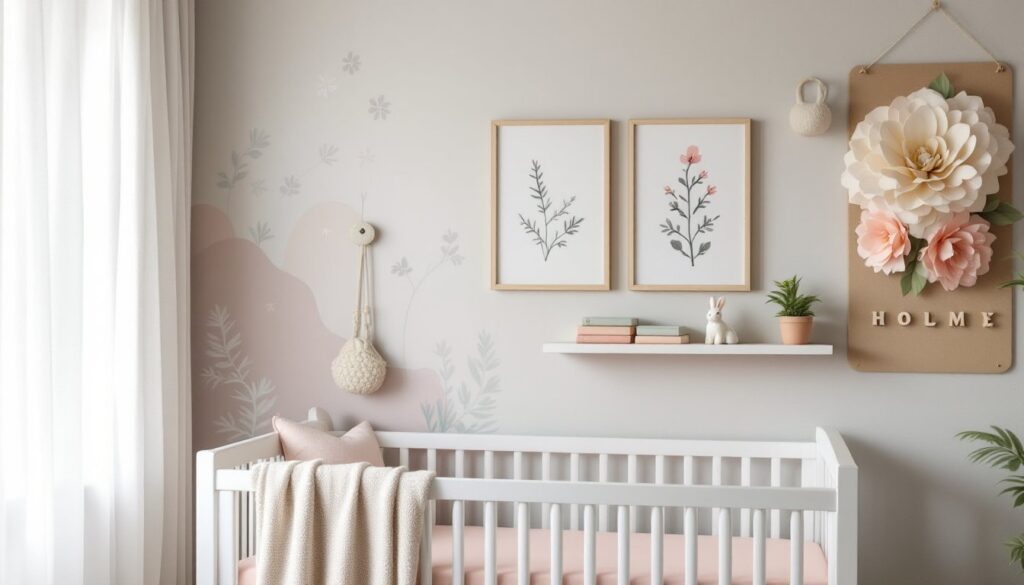
This style leans into soft pastels, illustrated woodland creatures, florals, and storybook motifs. Think hand-painted murals of forests, peel-and-stick decals of moons and stars, or framed prints featuring bunnies and fawns.
Wall treatments often include accent walls in blush, lavender, or sage green using low-VOC or zero-VOC paint (look for Greenguard Gold certification to minimize off-gassing in a baby’s room). Removable wallpaper with subtle floral prints works well here, brands offer pre-pasted options that install without professional help and peel off cleanly when it’s time to redecorate.
Layering is key. Combine a mural or wallpapered accent wall with floating shelves displaying small plush toys, board books, or ceramic animal figurines. Canvas prints in matching tones tie the look together without requiring nails, 3M Command picture hangers rated for the frame weight prevent drywall damage and adjust easily.
For creative home accessories, consider fabric bunting or macramé wall hangings. These add texture and can be swapped seasonally or as tastes change.
Modern Minimalist and Scandinavian Designs
This approach favors neutral palettes, whites, grays, taupes, with pops of muted color like terracotta, dusty rose, or charcoal. The aesthetic is clean, uncluttered, and designed to age well.
Geometric patterns are common: triangles, arcs, or mountain silhouettes painted in a single accent color. Use painter’s tape and a small foam roller for crisp lines. A 4-inch roller works better than a brush for even coverage on shapes.
Wall-mounted pegboards (often 24×24 inches) serve double duty as decor and storage. Paint them to match the wall color or leave natural wood, then hang small baskets, wooden letters spelling the baby’s name, or miniature hats.
Framed line art, simple sketches of animals, botanicals, or abstract shapes, keeps walls interesting without visual clutter. Stick to uniform frame sizes (three 8×10-inch prints in a row, for example) for a gallery feel. Black or natural wood frames suit this style best.
DIY Nursery Wall Decor Projects You Can Try
Custom wall decor saves money and adds a personal touch that off-the-shelf options can’t match.
Painted murals are more approachable than they sound. Use a projector to trace an image onto the wall, then fill in with acrylic craft paint. This works especially well for simple shapes, clouds, rainbows, oversized florals. A 2×3-foot mural takes about 3-4 hours including drying time. Seal with a clear matte acrylic sealer for easy cleaning.
For a no-paint option, try fabric-covered foam boards. Cut 1/2-inch foam core to 12×12 or 16×20 inches, wrap with coordinating fabric (cotton quilting fabric works well), and secure on the back with a hot glue gun. Arrange several in a grid for an upholstered wall effect. Attach using adhesive Velcro strips for damage-free hanging.
Wooden name signs are straightforward with basic tools. Cut 1×6 or 1×8 pine boards to spell out the baby’s name (a jigsaw or scroll saw handles curves: a miter saw works for block letters). Sand edges smooth with 120-grit sandpaper, paint or stain, then mount with keyhole hangers on the back.
Another beginner-friendly project: DIY decor tutorials often feature paper flower walls. Large tissue paper or cardstock flowers (10-14 inches in diameter) cluster above the crib or changing area. Attach to the wall with removable adhesive putty. They’re lightweight, inexpensive, and easy to replace if they get damaged.
Safety note: Anything mounted above or near the crib should be secured well. Avoid glass frames or heavy items that could fall. Use wall anchors rated for the item’s weight if screwing into drywall without hitting a stud.
Choosing the Right Colors and Patterns for Girl Nurseries
Color choice affects mood, light reflection, and how long the decor stays relevant.
Soft, muted tones, blush, peach, mint, lavender, are popular because they’re calming without being overly juvenile. They pair well with white furniture and natural wood accents, and they don’t scream “baby room” when the child turns four.
If going bold, limit bright or saturated color to one accent wall or a border. A deep coral or teal feature wall behind the crib draws the eye without overwhelming the space. The other three walls stay neutral to balance it out.
Patterns should scale appropriately. Large-scale florals or oversized polka dots work in bigger rooms (12×12 feet or more): smaller prints suit compact spaces better. Stripes, horizontal or vertical, add visual interest and can make walls appear taller or wider depending on orientation.
Avoid all-over busy patterns (tiny repeated motifs covering every wall). They’re hard to photograph, difficult to coordinate with textiles, and visually exhausting. Stick to patterned elements on one or two walls, or use patterns in decor pieces (framed fabric, removable decals) that can be changed easily.
Finish matters. Eggshell or satin paint finishes are more washable than flat but less reflective than semi-gloss. For nurseries, eggshell strikes the right balance, it hides minor imperfections and wipes clean without glare.
Budget-Friendly Wall Decor Solutions That Look Expensive
High-end nursery looks don’t require a four-figure budget. Strategic choices and DIY sweat equity go a long way.
Removable wallpaper samples cost a fraction of full rolls. A single 2×2-foot sample ($10-$15) can frame as art or cover the back panel of a bookshelf for a pop of pattern.
Thrifted frames from estate sales or secondhand stores can be spray-painted to match. A cohesive frame color (all white, all gold, all black) makes mismatched sizes look intentional. Fill with free printable art from design blogs or seasonal decorating guides that offer downloadable nursery prints.
Washi tape murals require zero wall damage and cost under $20. Use wide washi tape (1-2 inches) to outline shapes, a house, tree, geometric mountain range, directly on the wall. It peels off cleanly and leaves no residue on most painted surfaces. Test a small section first if using flat paint.
Floating shelves made from stained pine or poplar boards look custom but cost $15-$25 in materials per shelf. Cut a 1×6 board to desired length (36 inches is common), sand, stain or paint, and mount with concealed floating shelf brackets (pre-drilled for easy install). Display a mix of books, small plants, and wooden toys for a curated look.
Vinyl wall decals mimic hand-painted murals at a tenth of the cost. Quality decals ($25-$50 for a large set) apply smoothly with a squeegee and reposition during install. They remove without damaging paint, making them ideal for renters or anyone planning to update the room in a few years.
Finally, oversized art from posters works if framed correctly. A $12 poster in a $30 frame looks deliberate. Opt for matte printing and a simple frame: avoid glossy finishes that cheapen the effect.