Table of Contents
ToggleCoastal decor has evolved far beyond driftwood signs and seashell wreaths. Modern coastal wall decor strips away the kitschy clutter and leans into clean lines, natural textures, and ocean-inspired palettes that feel calm without looking like a boardwalk gift shop. Whether someone’s transforming a living room, bedroom, or entryway, the right wall treatments can anchor a space with that breezy, light-filled aesthetic, without compromising on sophistication. This guide walks through design principles, material choices, color strategies, and hands-on DIY projects that homeowners can tackle to achieve a modern coastal look.
Key Takeaways
- Modern coastal wall decor prioritizes clean lines, natural textures, and restrained palettes over literal beach imagery, creating a sophisticated look that works in any climate.
- Abstract ocean-inspired artwork and minimalist black-and-white photography work best for modern coastal spaces, hung at eye level and framed in natural wood or metal for gallery-modern appeal.
- Textured materials like woven fiber art, reclaimed wood, ceramics, and natural fiber baskets are essential for adding depth and warmth to modern coastal walls without visual clutter.
- Foundation colors should use warm whites and soft grays with muted accent colors like dusty blues and seafoam greens, following the 60-30-10 rule for balanced design.
- Three beginner-to-intermediate DIY projects—driftwood wall hangings, framed coastal textiles, and reclaimed wood planks—allow homeowners to create custom modern coastal wall decor affordably and with minimal skill requirements.
What Defines Modern Coastal Wall Decor?
Modern coastal style blends the relaxed, organic feel of beach living with contemporary design discipline. It’s about restraint: fewer tchotchkes, more intentional focal points.
Key characteristics include:
- Neutral base palettes (whites, soft grays, warm sand tones) accented with ocean hues
- Natural materials like reclaimed wood, jute, linen, and rattan
- Clean silhouettes instead of ornate frames or fussy detailing
- Layered texture rather than bold patterns, think woven fiber art, plaster reliefs, or matte ceramics
- Subtle nautical nods (rope, sailcloth, driftwood) used sparingly and abstractly
Unlike traditional coastal decor, which leans heavily on literal beach imagery, anchors, lighthouses, cartoon crabs, modern coastal takes inspiration from the feeling of the coast: light, air, and natural erosion patterns. It’s the difference between hanging a “BEACH” sign and installing a large-scale black-and-white photograph of tidal flats.
This approach works in any climate or region. Someone in landlocked Colorado can create the same vibe by focusing on materials and color theory instead of literal seashore references. The style is forgiving and adaptable, which is why it’s gained traction in home design circles that value contemporary furniture and minimalist interiors.
Best Modern Coastal Wall Art Styles for Your Space
Choosing the right art is half the battle. Modern coastal spaces benefit from pieces that evoke water, sky, and shoreline without resorting to clichés.
Abstract Ocean-Inspired Artwork
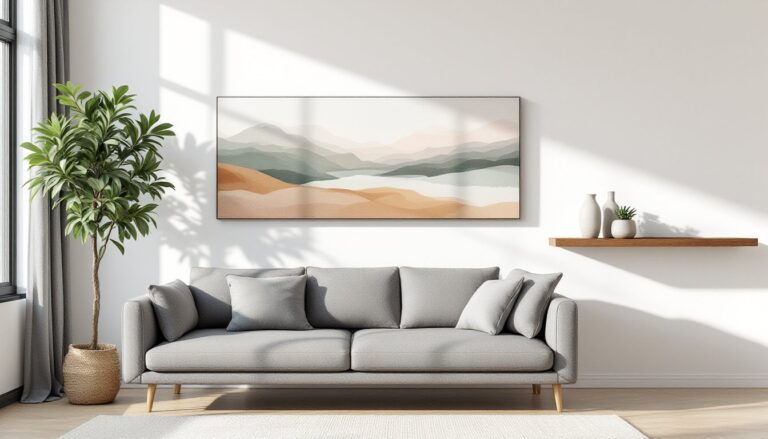
Abstract art inspired by ocean movement, swirling blues, sandy neutrals, seafoam greens, brings energy to a room without overwhelming it. Look for pieces with:
- Textured brushstrokes or mixed media (acrylics combined with sand, plaster, or fabric)
- Horizontal compositions that mimic the horizon line
- Layered washes in watercolor or diluted acrylics that suggest tidal flow
Oversized canvases (36″ x 48″ or larger) work well above sofas or beds. For tighter budgets, printable abstract art from independent artists can be framed in simple natural wood or white-painted frames with wide mats to give breathing room.
Pro tip: Hang abstract pieces at eye level (center point around 57″–60″ from the floor). In rooms with vaulted ceilings, go slightly higher to balance vertical space.
Minimalist Nautical Prints and Photography
Black-and-white photography of shorelines, maritime rope details, or weathered boat hulls offers a graphic punch without color competition. Minimalist line drawings, a single brushstroke depicting a wave, or simple ink sketches of coastal grasses, also fit this category.
Frame choices matter:
- Thin black metal frames for a gallery-modern feel
- Light oak or ash frames to warm up cooler palettes
- No-frame edge mounting (direct-to-board prints) for an ultra-clean look
Group smaller prints (8″ x 10″ or 11″ x 14″) in odd-numbered clusters (three or five) with consistent spacing, typically 2″–3″ between frames. Use painter’s tape and kraft paper templates to mock up arrangements before committing to nail holes.
Avoid overly literal imagery (flip-flops, surfboards, “Life’s a Beach” typography). The goal is suggestion, not declaration.
Textured and Natural Materials for Coastal Walls
Texture is the secret weapon in modern coastal design. Flat walls feel sterile: layered surfaces add depth and warmth.
Popular textured wall treatments:
- Woven fiber art: Macramé wall hangings, jute tapestries, or woven seagrass panels. Choose pieces with loose, organic weaves rather than tight geometric patterns.
- Reclaimed wood installations: Horizontal planks of weathered cedar, pine, or driftwood mounted as accent walls or framed art. Use 1×4 or 1×6 nominal boards (actual dimensions: 3/4″ x 3.5″ or 3/4″ x 5.5″) for manageable weight and clean lines.
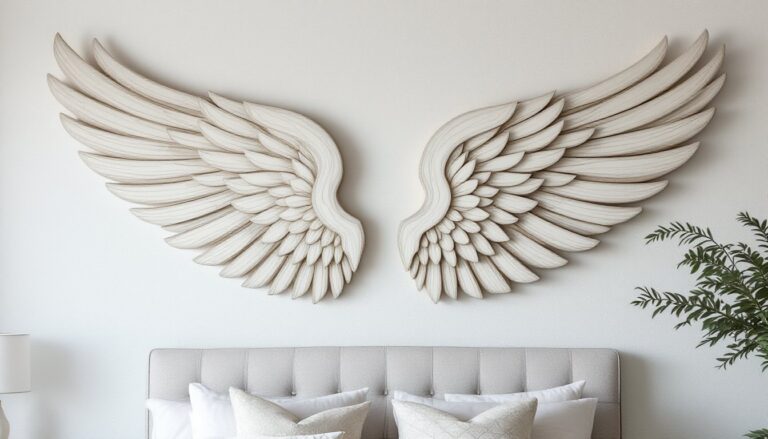
- Ceramic or plaster wall sculptures: Three-dimensional pieces in matte white, sand, or seafoam glazes. Coral-inspired forms or abstract wave shapes add sculptural interest.
- Natural fiber baskets: Shallow, flat-woven baskets in varying sizes mounted as a gallery wall. Secure with picture-hanging wire or keyhole brackets rated for the basket’s weight.
Installation tips:
- For wood planks, locate studs with a stud finder and fasten with 2″ finish nails or construction adhesive rated for interior use. If mounting over drywall between studs, use toggle bolts or heavy-duty picture hangers rated for 20+ lbs.
- Macramé and fiber art should be hung from ceiling hooks or wall-mounted dowels to prevent sagging. A 1″ diameter dowel cut to the piece’s width works well: stain or paint it to match the room.
- Always check load ratings. A large driftwood piece can weigh 15–30 lbs: undersized hardware leads to drywall damage.
These materials pair well with painted shiplap or beadboard wainscoting, both classic coastal elements that feel crisp when painted in semi-gloss white or soft gray.
Color Palettes That Elevate Modern Coastal Interiors
Color choices set the tone. Modern coastal palettes skip the bright primary blues of nautical kitsch in favor of muted, nature-derived tones.
Foundation colors:
- Whites and off-whites: Warm whites (with slight cream or beige undertones) feel cozier than stark cool whites. Try Sherwin-Williams Alabaster or Benjamin Moore White Dove.
- Soft grays: Greige (gray-beige hybrids) like Agreeable Gray or Revere Pewter work as neutral backdrops.
- Sandy beiges and taupes: Anchors the palette with earthiness.
Accent colors:
- Dusty blues and slate: Think overcast skies, not tropical lagoons. Colors like Benjamin Moore Gentleman’s Gray or Farrow & Ball Borrowed Light.
- Seafoam and sage greens: Muted, grayed-down greens that nod to coastal vegetation.
- Weathered driftwood browns: Warm grays with brown undertones.
Application strategy:
Use the 60-30-10 rule: 60% dominant neutral (wall color), 30% secondary color (larger furniture, textiles), 10% accent color (throw pillows, small art pieces, decorative objects).
For wall decor specifically, stick to art and materials that echo this restrained palette. A single piece with a pop of coral or terracotta can work as a focal point, but balance it with surrounding neutrals.
Paint tips:
- Use eggshell or satin finishes on walls for easy cleaning and subtle sheen.
- Prime new drywall or patched areas with a PVA primer before topcoating.
- One gallon of paint typically covers 350–400 sq ft per coat: most colors require two coats for even coverage.
Coastal color palettes also draw heavily from home interior design trends that emphasize organic, biophilic elements and calming tones.
DIY Modern Coastal Wall Decor Projects
Hands-on projects let homeowners customize their coastal aesthetic without blowing the budget. These three builds range from beginner to intermediate skill levels.
Project 1: Driftwood Dowel Wall Hanging
Skill level: Beginner | Time: 1–2 hours
Materials:
- 1 driftwood piece or weathered branch, 24″–36″ long
- Cotton macramé cord or jute twine
- Small eye hooks or leather cord for hanging
Steps:
- Clean and dry the driftwood. Sand any sharp edges with 120-grit sandpaper.
- Cut 12–16 lengths of cord, each 3x the desired hanging length (e.g., for a 24″ drop, cut 72″ pieces).
- Fold each cord in half and loop it over the driftwood using a lark’s head knot.
- Trim the ends at varying lengths for a tapered look, or keep them even and add wooden beads.
- Attach eye hooks to each end of the driftwood and hang from a ceiling hook or picture rail.
Project 2: Framed Coastal Textile Art
Skill level: Beginner | Time: 30 minutes
Materials:
- Large shadow box frame (16″ x 20″ or larger)
- Linen, burlap, or canvas drop cloth in neutral tone
- Fabric glue or double-sided tape
- Optional: stencil and fabric paint for subtle design
Steps:
- Remove the glass and backing from the frame.
- Cut fabric to fit the backing board, leaving 1″ overhang on all sides.
- Wrap fabric tightly around the board and secure on the back with fabric glue or tape.
- (Optional) Use a stencil and matte fabric paint to add a simple wave or line motif.
- Reassemble the frame and hang.
This project works especially well with coastal design elements that emphasize texture and natural fiber.
Project 3: Reclaimed Wood Plank Wall Art
Skill level: Intermediate | Time: 3–4 hours
Materials:
- 6–8 pieces of reclaimed or weathered 1×4 or 1×6 boards, cut to varying lengths (18″–30″)
- 1×2 furring strips for backing frame
- Wood glue and 1-1/4″ brad nails
- Sandpaper (80-grit and 120-grit)
- Optional: whitewash stain or matte sealer
Tools:
- Miter saw or circular saw
- Brad nailer (or hammer and finish nails)
- Drill with pilot bit
Steps:
- Cut boards to desired lengths. Sand edges smooth.
- Build a rectangular backing frame from 1×2 strips using wood glue and brad nails.
- Arrange boards horizontally across the frame, spacing 1/4″–1/2″ apart for visual interest.
- Apply wood glue to the back of each board and nail into the frame. Pre-drill pilot holes to prevent splitting.
- (Optional) Apply a whitewash (1 part white paint to 3 parts water) with a rag, wiping off excess.
- Mount the finished piece using D-ring hangers and wall anchors rated for the total weight.
Safety notes:
- Wear safety glasses when cutting wood.
- Use a dust mask when sanding reclaimed wood (may contain lead paint or mold).
- Ensure proper ventilation if using stains or sealers.
These DIY projects offer flexibility in scale and materials, allowing homeowners to tailor pieces to their specific wall dimensions and color schemes. The key is maintaining the restrained, textured aesthetic that defines modern coastal design, less “beach shack,” more “architect’s summer retreat.”