Table of Contents
ToggleDecorating a baby boy’s nursery goes beyond picking cute prints, it’s about creating a space that’s calming, stimulating, and safe for development. Wall decor sets the tone for the entire room, establishing visual interest at a baby’s eye level and providing focal points that grow with the child. Unlike flooring or furniture, wall treatments are relatively low-commitment and budget-friendly, making them ideal for parents who want personalization without major renovation. The right approach balances aesthetics with function, ensuring decor stays secure as curious hands start reaching and pulling. This guide walks through theme selection, DIY options, color theory, and critical safety protocols.
Key Takeaways
- Baby boy nursery wall decor serves developmental purposes—high-contrast patterns and bold shapes help newborns develop visual tracking skills in their first months, while establishing focal points that grow with the child.
- Popular themes like nautical, woodland, and safari remain timeless and offer clear design direction; minimalist and Scandinavian-inspired approaches provide modern alternatives that reduce visual clutter while maintaining warmth.
- DIY wall decor options including canvas painting, wood letter signs, fabric hangings, and gallery walls offer personalization and savings without requiring professional installation.
- Color psychology matters: cooler tones like navy and slate feel more calming, while neutral bases provide flexibility for gifts and hand-me-downs; avoid high-contrast busy patterns on all four walls to prevent overstimulation.
- Safety is non-negotiable—never hang anything directly above the crib, use acrylic instead of glass frames, secure shelving into studs with load-rated hardware, and inspect hanging hardware every 3-4 months for stability.
- Paint selection impacts both function and safety: choose eggshell or satin finishes for scrubbability, use zero-VOC formulas, test colors in natural light across different times of day, and allow 72 hours curing time before introducing baby to the space.
Why Wall Decor Matters in Your Baby Boy’s Nursery
Wall decor serves multiple developmental and practical purposes in a nursery. High-contrast patterns and bold shapes help newborns develop visual tracking skills during the first three months when their vision is still forming. As babies grow, wall art provides points of reference that encourage head turning, reaching, and eventually standing.
From a design standpoint, walls are the largest uninterrupted surface in most nurseries, typically 8 to 10 feet high and spanning 12 to 15 feet per wall in a standard 10×12 room. Leaving them bare creates a stark, institutional feel, while thoughtful decor adds warmth and personality. Wall treatments also offer flexibility: removable decals, framed prints, and canvas art can be swapped out as the child’s interests evolve, unlike permanent painted murals that require repainting.
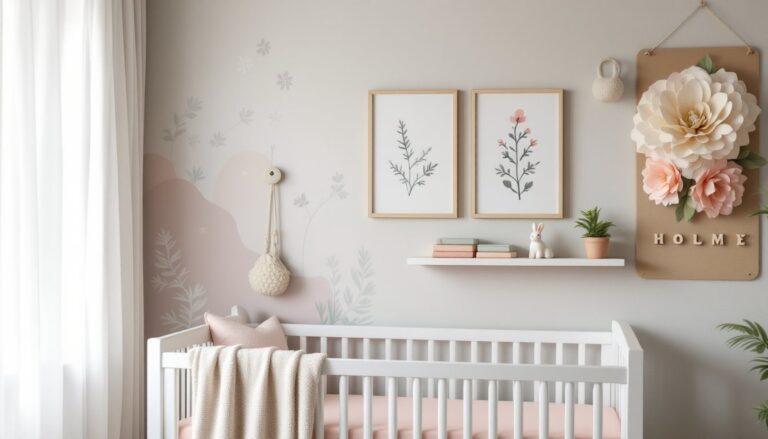
Practically, wall decor helps define zones in multi-function nurseries. A gallery wall above the changing table creates a visual anchor, while a statement piece over the crib (mounted securely and out of reach) establishes the sleeping zone. This spatial definition becomes even more important in smaller nurseries where furniture placement options are limited.
Popular Baby Boy Nursery Wall Decor Themes and Styles
Classic and Timeless Options
Traditional themes like nautical, woodland, and safari remain popular because they age well and offer clear design direction. Nautical schemes typically incorporate navy blue, white, and red with anchors, sailboats, and rope elements. These work particularly well in coastal regions or for families with maritime connections.
Woodland themes feature forest animals (bears, foxes, deer), tree silhouettes, and earthy tones like moss green, tan, and charcoal. This style pairs easily with natural wood furniture and woven baskets, creating cohesive design without much effort. Decal sets often include birch tree trunks that span floor to ceiling, adding vertical interest in rooms with standard 8-foot ceilings.
Safari and jungle themes use lions, elephants, and giraffes in more saturated colors, burnt orange, sage green, and warm browns. These work well for parents who want more visual energy without going overly bright. Framed animal prints from DIY decor projects can be matted in neutral tones to keep the look grounded.
Modern and Minimalist Approaches
Minimalist nurseries favor geometric shapes, line drawings, and limited color palettes, usually two to three colors max. Think simple mountain ranges in charcoal gray, abstract mobiles in black and white, or single oversized letters in matte finish.
Scandinavian-inspired designs use soft grays, whites, and natural woods with pops of muted blue or dusty green. Wall-mounted shelves (cleats secured into studs, not drywall anchors alone) display wooden toys and books as functional decor. This approach reduces visual clutter while maintaining warmth.
Monochrome schemes in black, white, and gray offer maximum flexibility. They work with any accent color and won’t clash if decor gifts arrive in unexpected hues. High-contrast black-and-white prints also provide the strongest visual stimulation for infants under six months, supporting early visual development.
DIY Wall Decor Ideas You Can Create at Home
Creating custom wall decor saves money and adds personal meaning. Canvas painting requires minimal skill when using stencils or painter’s tape for geometric designs. Pick up pre-stretched canvases (common sizes: 11×14, 16×20, or 24×36 inches) and acrylic craft paint. Apply a base coat, let dry completely (typically 1-2 hours), tape off patterns, then apply accent colors. Remove tape while the top coat is still slightly tacky to prevent peeling.
Wood letter signs work well for personalization. Purchase unfinished wood letters (available in 6-inch to 24-inch heights) from craft stores, sand lightly with 120-grit sandpaper, then paint or stain. Mounting options include Command strips (rated for the letter’s weight plus 50% margin) or small L-brackets screwed directly into wall studs for heavier pieces over 2 pounds.
Fabric wall hangings offer texture without nails. Stretch patterned cotton or linen over embroidery hoops (8-inch to 12-inch diameter) and hang from ribbon or twine. This works especially well with vintage quilts or meaningful fabric from family members. Similar creative approaches to furniture makeovers can be applied to repurposing old frames or shutters as display pieces.
Gallery walls let parents mix purchased prints with personal photos. Use matching frames in one finish (matte black, natural wood, or white) for cohesion. Lay out the arrangement on the floor first, maintaining 2-3 inches between frames. Mark the wall lightly with painter’s tape to guide placement, then use a stud finder and appropriate hanging hardware, picture hooks for frames under 5 pounds, wall anchors rated for 10-15 pounds for anything heavier.
Removable wall decals are the most renter-friendly option. Quality decals use low-tack adhesive that won’t damage paint when removed. Clean walls with a damp cloth before application to ensure proper adhesion. Apply from the center outward, smoothing bubbles with a credit card edge.
Choosing the Right Colors and Patterns for Baby Boy Nurseries
Color psychology plays a real role in nursery design, even if the science is still developing. Blue tones remain popular not because of gender norms but because cooler hues tend to feel more calming than warm reds and oranges. Navy, slate, and powder blue each create different moods, navy adds sophistication and hides marks better, while powder blue feels softer and more traditional.
Neutral bases (gray, beige, white, greige) offer flexibility and make it easier to incorporate gifts or hand-me-downs. A neutral wall treatment means the bedding or curtains can change without repainting. Greige (gray-beige blends) has become particularly popular because it reads warm in natural light but stays neutral enough to pair with both cool and warm accents.
Avoid high-contrast busy patterns on all four walls, they can feel overstimulating and make the room appear smaller. Reserve bold patterns for a single accent wall or framed pieces. Small repeating patterns (tiny stars, polka dots, thin stripes) work better at scale than large, irregular designs which can overwhelm a small space.
Paint sheen matters more than many DIYers realize. Use eggshell or satin finish for nursery walls, they’re scrubbable without being shiny, which matters when pureed sweet potatoes inevitably get flung. Flat paint hides imperfections better but doesn’t clean well. Semi-gloss is too reflective for large wall areas but works for trim and doors.
Test colors with sample pots before committing. Paint a 2×2-foot section and observe it at different times of day, morning light, afternoon sun, and evening artificial light all shift how colors read. North-facing rooms receive cooler, bluer light and may make pale blues feel icy: south-facing rooms get warmer light that can make yellows and creams glow.
Safety Considerations When Decorating Nursery Walls
Safety trumps aesthetics in every nursery decision. Never hang anything directly above the crib within the crib’s footprint. If it’s mounted on the wall behind the crib, it must be secured well enough to stay put during an earthquake or if a toddler climbs and pulls on it. Use wall anchors rated for 3x the item’s weight or mount directly into studs whenever possible.
Avoid glass frames near cribs, changing tables, or play areas. Use acrylic or plexiglass instead, it looks identical once hung but won’t shatter if knocked down. Many frame manufacturers offer acrylic glazing as a standard option.
Secure all cords from window treatments, which are a strangulation hazard. If using wall-mounted shelving, install it at least 4 feet off the floor and use L-brackets screwed into studs, not just drywall. Floating shelves should be rated for the load you’re placing on them, a shelf full of hardcover books can weigh 20-30 pounds.
Check that paint and finishes are zero-VOC (volatile organic compounds). Most major paint brands now offer zero-VOC formulas in their standard lines. Let painted rooms cure for at least 72 hours with windows open before putting baby in the space.
Inspect hanging hardware every 3-4 months. Command strips lose adhesion over time, especially in humid climates. Screws can work loose as drywall settles. Give wall decor a gentle tug test, if it wiggles, remount it properly. Many budget home makeovers prioritize aesthetics, but in nurseries, installation quality matters as much as design.
Avoid small decorative items within reach once the baby starts pulling up (usually around 8-10 months). Anything that can fit through a toilet paper tube is a choking hazard. Wall decor should be mounted, not propped on furniture edges where it can be grabbed.