Table of Contents
ToggleCreating a beach-inspired bedroom doesn’t require oceanfront property, just the right mix of colors, textures, and materials. A coastal retreat vibe brings calm, light, and a sense of escape to any home, whether it’s a suburban ranch or a city apartment. This guide walks through the practical choices that make beach bedroom decor work: from paint and furniture to fabrics and lighting. Skip the seashell clichés and focus on the elements that deliver authentic coastal style without turning the room into a theme park.
Key Takeaways
- Beach bedroom decor relies on neutral color palettes of soft whites, sandy tones, and muted blues rather than bright tropical colors to create a serene, spacious retreat.
- Natural materials like linen, cotton, rattan, and weathered wood form the foundation of authentic coastal style and age gracefully without requiring high-end investments.
- Strategic lighting—including large windows, warm LED bulbs at 2700K-3000K, and dimmer switches—captures the soft, sun-kissed ambiance essential to beach-inspired bedrooms.
- Large-scale artwork and minimal wall decor with one high-quality statement piece outperform cluttered gallery walls and kitschy beach-themed accessories.
- Layered textiles with varying fabrics and textures, from crisp cotton percale to cable-knit throws, add depth while maintaining the light, airy feel of coastal design.
Why Beach-Inspired Bedrooms Create the Perfect Relaxing Sanctuary
Beach-themed bedrooms tap into the same psychology that makes coastal vacations restorative. Natural light, muted tones, and organic textures reduce visual clutter and mental noise. Unlike bolder design schemes, think industrial lofts or maximalist patterns, coastal decor leans toward simplicity and repetition of calming elements.
The color palette mirrors nature: soft blues, sandy neutrals, and whites that reflect light rather than absorb it. This creates a sense of spaciousness, even in smaller rooms. Materials like linen, cotton, jute, and weathered wood add tactile variety without overwhelming the senses.
From a practical standpoint, beach decor is forgiving. Natural fibers hide minor wear, and light colors make touch-ups easier than dark accent walls. The style also adapts well to varying budgets, high-end pieces mix seamlessly with thrifted finds, as long as the color story and material choices stay consistent. For homeowners looking to refresh a bedroom without a full renovation, coastal decor offers a clear visual direction and plenty of DIY-friendly options.
Essential Color Palettes for Authentic Coastal Vibes
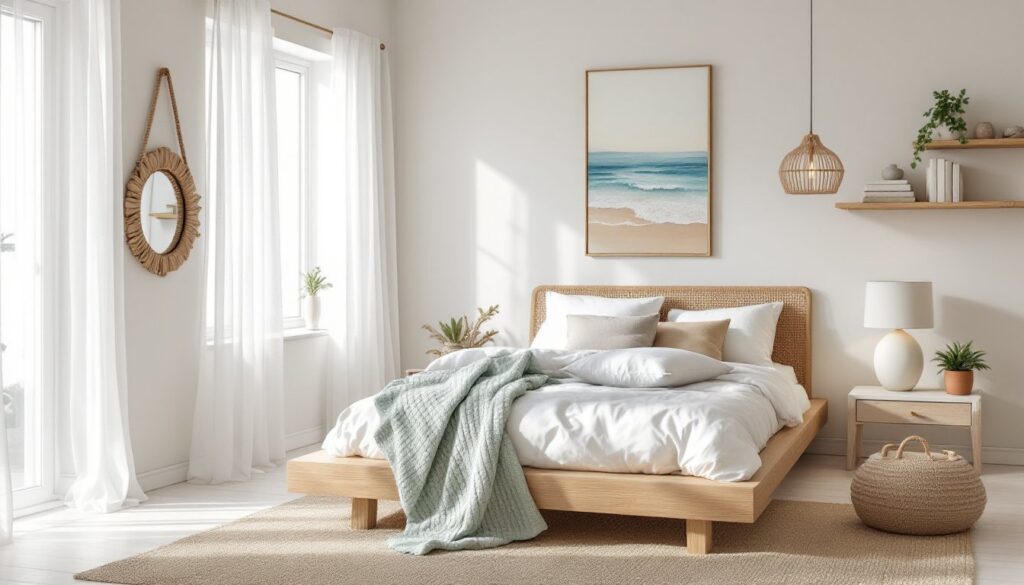
The foundation of any beach bedroom is the color palette. Start with a neutral base, soft whites, warm sand tones, or pale grays, on walls and larger furniture pieces. These shades reflect natural light and create the airy feel that defines coastal spaces.
For accent colors, pull from the ocean and shore: seafoam green, aqua, navy blue, and driftwood gray. Use these strategically on throw pillows, area rugs, or a single accent wall. Avoid overly saturated blues or tropical brights, they push the space toward tiki bar rather than serene retreat.
Paint choices matter. For walls, consider a matte or eggshell finish in shades like Benjamin Moore’s “White Dove” or Sherwin-Williams’ “Sea Salt.” These read as true neutrals in natural light but pick up subtle warmth or coolness depending on the time of day. If painting trim or furniture, satin or semi-gloss in crisp white brightens the room and stands up to cleaning.
Wood tones should lean weathered or whitewashed rather than dark cherry or espresso. If existing furniture is darker, consider a DIY whitewash or limewash technique, apply diluted white paint with a rag, then wipe back to let the grain show through. This technique works on solid wood pieces and gives them a sun-bleached, coastal look without full refinishing. Homeowners with rental restrictions can achieve similar effects with peel-and-stick wallpaper or wall panels that mimic shiplap or reclaimed wood textures.
Choosing the Right Furniture and Materials
Beach bedroom furniture prioritizes natural materials and simple lines. Rattan, wicker, and bamboo are classic choices, lightweight, durable, and visually light. Look for headboards, nightstands, or accent chairs in these materials. Avoid overly ornate pieces: coastal style favors function and clean profiles.
Solid wood furniture in light finishes works well. Pine, oak, or reclaimed wood pieces in whitewashed or weathered finishes complement the palette. If buying new, check for actual dimensions, a standard queen bed frame is 60″ x 80″, but headboard widths vary. Measure the wall space to ensure the piece doesn’t overwhelm the room.
For upholstered furniture, choose natural fabrics like linen or cotton canvas in neutral tones. These breathe better than synthetics and age gracefully. Slipcovers are a smart choice for accent chairs or benches, they’re washable and easy to swap seasonally.
DIY tip: Repurpose yard-sale finds or hand-me-downs with paint and new hardware. A dated oak dresser becomes coastal-chic with a coat of chalk paint in soft gray or white, then distressed lightly with fine-grit sandpaper (120-grit works well). Swap outdated brass pulls for brushed nickel or rope-wrapped handles to complete the look.
Avoid particle board or laminate furniture in beach bedrooms, it doesn’t age well and clashes with the organic vibe. Stick to solid wood or quality rattan, even if it means fewer pieces. A well-chosen platform bed and single nightstand beat a room full of mismatched IKEA basics.
Textiles and Bedding That Capture Ocean Elegance
Bedding sets the tone for a beach bedroom. Choose natural fibers, linen, cotton percale, or washed cotton, in whites, soft blues, or sandy neutrals. Linen wrinkles easily but offers unmatched breathability and a relaxed, lived-in look that suits coastal style perfectly. Cotton percale has a crisp, matte finish and stays cool in warm weather.
Layer textures to add depth. Start with a lightweight quilt or coverlet in white or natural linen, then add a textured throw in cable knit or waffle weave. Throw pillows in varying fabrics, linen, cotton, or even a small jute accent, keep the bed from looking flat. Stick to two or three coordinating colors rather than a rainbow of patterns.
Avoid heavy, dark fabrics. Skip velvet, brocade, or thick comforters unless you live in a cold climate. Even then, choose lighter colors to maintain the airy feel.
For window treatments, opt for sheer linen curtains or light-filtering roller shades. Floor-length white linen panels soften the room and diffuse natural light without blocking it entirely. If privacy is a concern, layer sheers over cellular shades in a neutral tone. Mount curtain rods 4-6 inches above the window frame and extend them 3-4 inches beyond each side to make windows appear larger.
Area rugs ground the space. Choose jute, sisal, or flat-weave cotton rugs in natural tones or subtle stripes. A 5′ x 8′ rug works under a queen bed with the top third under the frame and the rest extending out. These natural fiber rugs are durable but can be rough underfoot, layer a softer cotton runner at the bedside if needed. Inspiration for layering textures and choosing soft furnishings can be found in portfolios of coastal and minimalist bedroom designs.
Wall Decor and Accessories to Complete Your Beach Theme
Wall decor in a beach bedroom should feel intentional, not cluttered. Large-scale artwork works better than gallery walls of small prints. Look for oversized ocean photography, abstract wave paintings, or coastal landscapes in simple frames, white, natural wood, or brushed metal. A single 36″ x 48″ canvas makes more impact than a dozen 8″ x 10″ prints.
DIY option: Frame vintage nautical charts, botanical prints of coastal plants, or black-and-white beach photography. Thrift stores and estate sales often have cheap frames in outdated finishes, spray paint them matte white or soft gray for a quick refresh. Use picture-hanging strips rated for the frame weight if you’re renting or want to avoid wall damage.
Mirrors amplify light and space. A round or rectangular mirror with a rope-wrapped frame or weathered wood finish adds function and coastal flair. Hang it opposite a window to reflect natural light deeper into the room.
For shelving, floating shelves in light wood or white keep the look clean. Style them with a few carefully chosen items: a small piece of driftwood, a potted succulent, a stack of linen-bound books. Avoid tchotchke overload, three to five items per shelf is plenty.
Skip the kitsch. “Life’s a Beach” signs, plastic starfish, and nets full of shells read as tourist trap, not serene retreat. If incorporating shells or coral, choose one high-quality piece, a large conch shell or a piece of bleached coral in a glass cloche, and let it stand alone.
Consider shiplap or board-and-batten as an accent wall treatment. Real shiplap (nominal 1×6 or 1×8 pine boards with a rabbet joint) adds texture and authenticity. Installation requires a miter saw, nail gun, and basic carpentry skills. For a budget-friendly alternative, use 1/4″ plywood strips with small gaps to mimic the look. Paint everything the same color for a cohesive finish. Many DIY transformations and accent wall tutorials demonstrate these techniques with step-by-step photos.
Lighting Ideas for a Breezy, Sun-Kissed Atmosphere
Lighting makes or breaks the coastal vibe. Maximize natural light first, remove heavy drapes, clean windows thoroughly, and keep sills clear. If privacy allows, skip window treatments on upper-floor bedrooms to flood the space with daylight.
For overhead lighting, choose fixtures that feel airy and organic. Woven pendants, rattan drum shades, or capiz shell chandeliers add texture without visual weight. Avoid heavy wrought iron or ornate crystal, both clash with the beach aesthetic. If replacing a ceiling fixture, turn off power at the breaker, confirm it’s off with a non-contact voltage tester, and follow manufacturer instructions. Most pendant swaps take 30 minutes with basic tools.
Table lamps on nightstands should have simple bases, ceramic in white or soft blue, natural wood, or clear glass filled with sand or shells. Pair them with linen or cotton drum shades in white or natural tones. Use LED bulbs in 2700K-3000K (warm white) to mimic the soft glow of sunset rather than harsh daylight.
Dimmer switches are worth the upgrade. They let you adjust lighting from bright and energizing in the morning to soft and relaxing at night. Installing a dimmer requires basic electrical knowledge, turn off power at the breaker, remove the old switch, connect wires to the new dimmer per the diagram (usually black to black, white to white, ground to green), and secure it in the box. If you’re uncomfortable working with electrical, hire a licensed electrician. Dimmer installation typically costs $100-$150 per switch.
For ambient lighting, consider LED strip lights behind a headboard or under floating shelves. Choose warm white LEDs and hide the strips for a soft, indirect glow. Battery-powered or plug-in options avoid the need for hardwiring. String lights with Edison bulbs or simple white globes add a casual, beachy feel, drape them across a mirror or along a shelf, but avoid the dorm-room look by keeping them subtle and intentional.
Conclusion
A well-executed beach bedroom balances color, texture, and light to create a space that feels both restful and intentional. Stick to natural materials, a cohesive palette, and thoughtful layering, skip the gimmicks and let simplicity do the work. With the right choices, any bedroom can channel coastal calm, no ocean required.