Table of Contents
ToggleThe wall space above a couch is one of the most visible, and most underutilized, areas in any living room. Get it right, and the room feels finished, balanced, and intentional. Get it wrong, and even a well-furnished space looks incomplete or off-kilter. Unlike a gallery wall tucked in a hallway, this spot demands attention. It anchors the room visually, ties together furniture and color schemes, and sets the tone for the entire space. Whether working with a compact loveseat or a sprawling sectional, the principles of scale, balance, and installation remain consistent.
Key Takeaways
- The wall space above your couch is a critical focal point that should span two-thirds to three-quarters of the couch’s width, with the art center positioned 8 to 10 inches above the couch back for balanced proportions.
- Above couch wall decor serves three essential functions: it adds vertical interest, balances the horizontal mass of the furniture, and establishes a cohesive design language throughout the room.
- Choose decor that matches the couch’s style, material, and color scheme—mid-century modern furniture pairs with clean lines, while traditional interiors work with ornate frames and natural textures.
- Invest in proper hanging hardware such as wall anchors rated for double the frame’s weight or stud mounting for pieces over 30 pounds to prevent sagging drywall and ensure longevity.
- Gallery walls and multi-piece arrangements require careful planning with kraft paper templates and consistent spacing of 2 to 6 inches between frames to avoid visual clutter and maintain cohesion.
- Avoid common mistakes including hanging art too high near the ceiling, choosing undersized pieces that look disproportionate, and overcrowding the wall—white space gives the eye a place to rest.
Why the Space Above Your Couch Matters
The couch typically sits against the longest uninterrupted wall in a living room, making the space above it a natural focal point. When someone walks into the room, their eyes land there first, before the coffee table, before the TV, before the throw pillows.
Leaving that wall blank creates a visual void. The room feels unfinished, like a half-painted fence. But cluttering it with undersized frames or mismatched pieces creates the opposite problem: visual noise that fragments the space.
Proper wall decor above the couch serves three functions. It adds vertical interest that draws the eye upward, making ceilings feel higher. It balances the horizontal mass of the furniture below. And it establishes a cohesive design language that carries through the rest of the room. This isn’t about trends or aesthetics alone, it’s about proportion, sightlines, and how a space reads from the entry point.
How to Choose the Right Wall Decor for Above Your Couch
The wrong piece makes even expensive furniture look cheap. The right piece pulls the room together without shouting for attention. The key lies in matching the decor style to the room’s function, the couch’s size, and the wall’s dimensions.
Material and finish matter. A sleek metal sculpture suits a modern space with clean lines and neutral tones. Rustic wood frames or woven fiber art fit rooms with natural textures and earthy palettes. High-gloss acrylic prints work in contemporary settings, while canvas or linen adds warmth to traditional interiors.
Color and contrast guide the eye. If the couch and walls are neutral, the decor can introduce bold color or pattern. If the room already features strong hues, a monochromatic or tonal piece prevents overload. Black-and-white photography, line drawings, or metallics provide contrast without competing with existing color schemes.
Permanence versus flexibility. Renters and frequent redecorators should avoid methods that damage drywall extensively. Adhesive strips, picture rail systems, or leaning art on a console table offer flexibility. Homeowners planning to stay put can invest in proper hardware: wall anchors rated for the frame’s weight, or mounting directly into studs for heavier pieces.
Measuring and Proportions That Work
Guesswork leads to holes in the wrong places and returns to the frame shop. Measure twice, drill once.
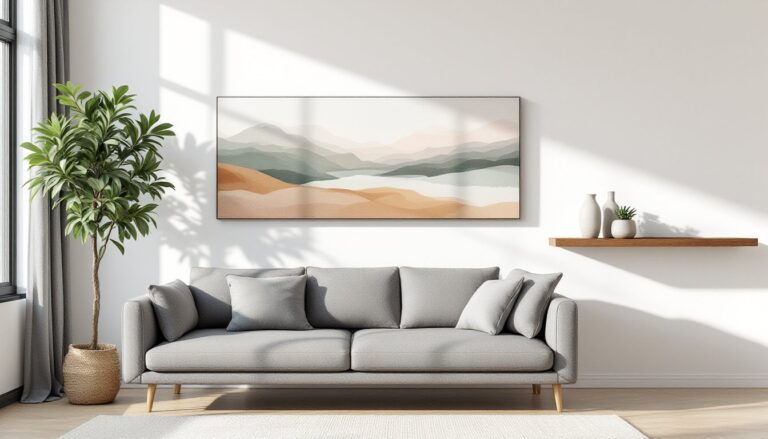
Width: The decor should span two-thirds to three-quarters of the couch’s width. For a standard 84-inch sofa, that’s roughly 56 to 63 inches of total wall coverage. A single oversized piece works, or a gallery arrangement that reads as one cohesive unit within those boundaries.
Height placement: The center of the artwork should sit 8 to 10 inches above the back of the couch. Museums hang art at 57 to 60 inches from the floor (eye level for average adults), but furniture changes the equation. If the couch back is 30 inches high, the art center should land around 38 to 40 inches from the floor.
Ceiling clearance: Leave at least 6 to 12 inches between the top of the decor and the ceiling. Crowding the ceiling makes the room feel cramped, regardless of actual square footage.
Tool tip: A laser level ($20–$40 at most home centers) beats eyeballing every time. Mark the centerline, then measure outward for symmetry. If the wall has texture or the couch isn’t perfectly level, the laser compensates.
Large-Scale Art and Canvas Prints
A single oversized piece makes a bold statement with minimal installation effort. It’s the go-to for homeowners who want impact without the fuss of arranging multiple frames.
Canvas prints remain popular because they’re lightweight, affordable, and easy to hang. Stretched canvas over a 1.5-inch wood frame gives depth without added weight. For living rooms with high ceilings, prints as large as 60 x 40 inches fill the space without overwhelming it. Photographers and digital artists often print on canvas to add texture that fine-art paper lacks.
Framed posters and prints under glass offer a cleaner, more formal look. A 2-inch mat around the image adds breathing room and draws the eye inward. Float-mounting, where the print appears to hover inside the frame, works well for contemporary interiors. For pieces over 30 x 40 inches, use acrylic glazing instead of glass: it weighs half as much and won’t shatter if the hanging hardware fails.
Original art on panel or stretched linen elevates the space but requires proper support. A 36 x 48-inch oil painting on canvas can weigh 15 to 20 pounds. Wall anchors rated for at least double the frame’s weight prevent sagging drywall. If the wall is plaster or masonry, use toggle bolts or masonry anchors instead of plastic sleeves.
Large-scale pieces work best in rooms with minimal competing elements. If the couch is a solid color and the walls are neutral, the art becomes the room’s anchor. If the room already features patterned rugs, bold throw pillows, or busy wallpaper, a simpler, more subdued piece prevents sensory overload.
Gallery Walls and Multi-Piece Arrangements
Gallery walls let homeowners mix mediums, sizes, and styles into a curated collection. They’re also the easiest arrangement to mess up, uneven spacing, mismatched frames, and poor composition plague amateur attempts.
Layout planning prevents regret. Cut kraft paper templates to match each frame’s dimensions. Tape them to the wall, step back, adjust, and repeat until the arrangement feels balanced. Photography apps with augmented reality features can overlay digital mockups on the actual wall, but paper templates allow tactile adjustments.
Frame consistency versus eclectic mix. Matching frames in the same finish (all black, all natural wood, all white) create cohesion even when the art varies wildly. Mixing frame styles works if there’s a unifying element: all black-and-white photos, all botanical prints, all square formats. Without that thread, the wall reads as clutter.
Spacing and alignment. Maintain 2 to 3 inches between frames for a tight grid, or 4 to 6 inches for a looser, more casual feel. For a salon-style gallery, vary the spacing slightly but keep the outer perimeter aligned, imagine a rectangle drawn around the entire arrangement.
Hanging hardware for multiples. Picture-hanging strips work for lightweight frames (under 5 pounds each), but a wall full of heavy pieces needs proper anchors. A picture rail system with adjustable cables or chains lets frames hang at different heights without drilling a dozen holes. The rail mounts once into studs or heavy-duty anchors, and individual frames hook onto the cables.
Triptychs and diptychs offer the gallery wall aesthetic with built-in cohesion. A three-panel painting or photo series spans the same width as a single large piece but adds dimension and movement. Ensure each panel hangs level and the spacing between panels matches exactly, 1 to 2 inches is standard. Use a stud finder to locate solid backing, especially for the outer panels that bear the most visual weight.
Mirrors, Shelving, and Dimensional Decor
Not every wall above a couch needs flat art. Three-dimensional elements add depth, function, and sometimes even light.
Mirrors amplify light and space. A large mirror (30 x 40 inches or bigger) reflects natural light from windows opposite the couch, brightening the room without additional fixtures. In narrow living rooms, mirrors create the illusion of depth. Frameless mirrors suit modern interiors: ornate frames work in traditional or eclectic spaces. Ensure the mirror doesn’t reflect clutter or unflattering angles, test the sightline before mounting.
Floating shelves turn the wall into functional storage. Stained hardwood or powder-coated steel brackets support shelves that hold books, plants, small sculptures, or rotating seasonal decor. For load-bearing shelves, locate studs with a stud finder and use 3-inch wood screws (not drywall anchors). Each bracket should hit at least one stud. If studs don’t align with the desired shelf placement, install a horizontal mounting board across multiple studs, then attach brackets to the board.
Keep shelf depth proportional: 6 to 8 inches deep for small objects, 10 to 12 inches for books or larger items. Shelves deeper than 12 inches overwhelm the couch below and collect dust.
Woven wall hangings, macramé, and fiber art add texture and warmth. These work especially well in spaces dominated by hard surfaces, leather, metal, glass. Hang them from a wooden dowel or decorative rod mounted on simple brackets. The softness contrasts nicely with structured furniture.
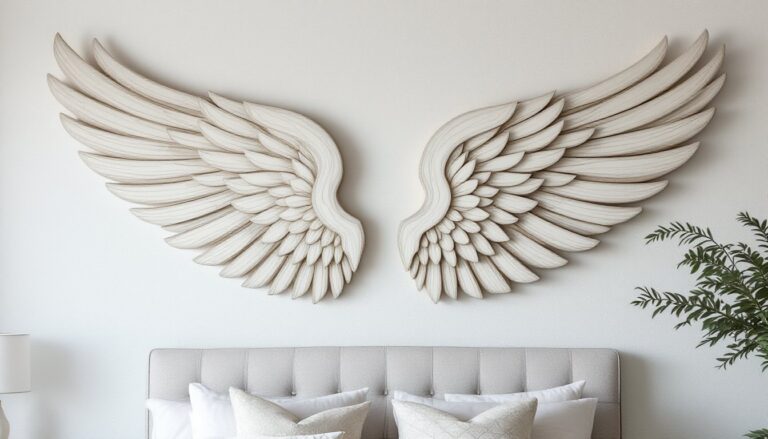
Metal wall sculptures in geometric or organic shapes introduce dimension without bulk. Look for pieces with integrated hanging hardware welded to the back. Lightweight aluminum or hollow steel keeps the weight manageable. For rusted or distressed finishes, confirm the piece has been sealed to prevent staining the wall. Some homeowners incorporate dynamic focal points that shift with the season or mood of the room, but functionality should always guide the choice.
Plate walls and ceramic collections suit farmhouse or cottage-style interiors. Use plate hangers (wire or adhesive disc types) rated for each plate’s size. Arrange plates in a symmetrical grid or asymmetrical cluster, treating them like a gallery wall. Secure each hanger properly, ceramic is heavier than it looks, and a fallen plate won’t survive.
Common Mistakes to Avoid When Decorating Above Your Couch
Even experienced DIYers stumble on a few predictable pitfalls.
Hanging art too high. The most frequent mistake. If the decor floats near the ceiling, it disconnects visually from the furniture. The 8-to-10-inch rule (measured from couch back to art center) prevents this.
Choosing undersized pieces. A 16 x 20-inch frame above an 84-inch couch looks like a postage stamp. When in doubt, go larger. Mock up the dimensions with painter’s tape on the wall before buying.
Ignoring the couch’s style. Mid-century modern furniture clashes with ornate Victorian frames. A low-profile contemporary sectional doesn’t pair well with heavy, carved wood. Match the decor’s visual weight and style to the room’s overall aesthetic.
Skipping wall anchors for heavy pieces. Drywall alone supports about 10 pounds per screw, barely enough for a medium frame. Anything heavier needs anchors or stud mounting. Toggle bolts or molly bolts distribute weight across a larger drywall area. For pieces over 30 pounds, find the studs.
Using the wrong hanging hardware. Sawtooth hangers work for lightweight frames but slip under heavier loads. D-rings and picture wire offer more security. Wire should span about two-thirds of the frame’s width and hang from two points, not one. Use braided galvanized steel wire rated for the frame’s weight.
Forgetting to level. A frame that’s even slightly crooked draws the eye for all the wrong reasons. Use a bubble level or a smartphone leveling app. Mark the wall lightly with a pencil, double-check, then drill.
Neglecting maintenance. Dust accumulates on frames, shelves, and dimensional decor. Wipe frames with a microfiber cloth every few weeks. Vacuum fabric wall hangings gently with a brush attachment. Check hanging hardware annually, wire can fray, adhesive strips lose grip, and screws loosen over time.
Overcrowding the wall. More isn’t always better. White space (or wall color) between and around decor elements gives the eye a place to rest. If considering whether to add another piece, the answer is usually no. Designers often reference room-by-room design strategies to maintain balance and avoid visual clutter.
The wall above the couch should enhance the room, not dominate it. Measure carefully, choose pieces that match the scale and style of the furniture, and invest in proper hanging hardware. A well-chosen piece transforms a living room from a collection of furniture into a cohesive, intentional space.