Table of Contents
ToggleGreen has earned its spot as one of the most versatile and timeless colors in interior design. Whether you’re drawn to the calming vibes of sage or the richness of emerald, green living room decor brings nature indoors while working with nearly any design style, from farmhouse to modern minimalist. Unlike trend-chasing neutrals that come and go, green offers staying power without feeling dated. This guide walks through practical, doable ways to introduce green into your living room, from choosing the right shade for your light conditions to pairing it with complementary colors that make the whole room work together.
Key Takeaways
- Green living room ideas work across nearly any design style because green pairs naturally with both warm and cool tones, offering staying power without feeling dated.
- Light green shades like sage and mint are ideal for smaller spaces with limited natural light, while deeper greens like emerald and forest green shine in larger rooms with high ceilings.
- An accent wall is the lowest-commitment way to test green in your living room—pick a focal wall like behind your sofa or framing your TV to make the color feel intentional.
- Green furniture and textiles, such as velvet sofas or throw pillows, let you introduce the color without permanent paint commitments and allow easy swaps as your style evolves.
- Pair green with complementary colors like warm neutrals, brass metallics, or terracotta to create a cohesive palette, and always test samples under your actual lighting conditions before committing.
- Green reduces eye strain and creates a genuinely restful environment, making it psychologically ideal for living rooms where you spend evenings unwinding or hosting friends.
Why Green Is the Perfect Color for Your Living Room
Green sits right in the middle of the visible spectrum, making it one of the easiest colors for the human eye to process. That’s not design fluff, it’s why green reduces eye strain and creates a genuinely restful environment. For a living room, where you’re likely spending evenings unwinding or hosting friends, that matters.
From a practical standpoint, green also plays well with both warm and cool tones. Pair it with brass fixtures and terracotta accents for warmth, or lean into chrome and marble for a cooler, contemporary feel. It’s one of the few colors that doesn’t box you into a single aesthetic direction.
Green interior design also hides minor wall imperfections better than stark whites or deep charcoals. Mid-tone greens, especially, camouflage drywall seams, patched nail holes, and uneven texture, helpful if you’re working with older plaster walls or a less-than-perfect DIY paint job. Plus, green won’t show scuff marks as readily as lighter neutrals, which is a win if you’ve got kids, pets, or frequently rearranged furniture.
Choosing the Right Shade of Green for Your Space
Light and Airy: Sage, Mint, and Seafoam Green
Light green living room ideas work best in spaces with limited natural light or smaller square footage. Sage, mint, and seafoam reflect more light than darker greens, making a 10×12 room feel less cramped. These shades pair naturally with white trim, light oak floors, and linen or cotton textiles.
If you’re painting, look for formulas with an LRV (Light Reflectance Value) above 50. That number tells you how much light the paint bounces back, the higher the LRV, the brighter the room feels. Sage typically lands between 50–60 LRV, while mint can push into the mid-60s.
One thing to watch: cooler mint tones can read slightly blue or gray depending on your lighting. Test a sample on at least two walls, one that gets morning sun and one that doesn’t, before committing to a five-gallon bucket. Paint looks different under north-facing windows versus south-facing ones, and mint is particularly sensitive to that shift.
Bold and Dramatic: Emerald, Forest, and Hunter Green
Modern green living room designs often lean into deeper shades like emerald, forest, or hunter green. These work well in larger rooms with high ceilings or abundant natural light, where the richness won’t feel oppressive. Expect an LRV below 20 for most of these, meaning they absorb light rather than reflect it.
Deep greens show brush strokes and roller marks more than lighter colors, so proper prep and application matter. Use a high-quality primer (especially over existing bold colors) and apply two coats with a 3/8-inch nap roller for smoother coverage. If you’re working with semi-gloss or satin finishes, any missed spots or thin patches will catch the light and stand out.
These shades also amplify texture. If you’re planning board-and-batten, shiplap, or picture-frame molding, a forest green makes those details pop. Just know that darker greens can make a room feel smaller, so balance them with lighter furniture, large mirrors, or strategically placed lighting.
Green Accent Wall Ideas That Make a Statement
An accent wall is the lowest-commitment way to test green in your living room. Pick the wall behind your sofa, the one framing your TV, or a chimney breast if you’ve got one. Avoid walls with lots of windows or doors, you want enough uninterrupted surface to make the color feel intentional, not like you ran out of paint.
For a clean, modern look, stop the green at the ceiling line and keep the trim white or off-white. If you want a cozier, more enveloping feel, carry the green onto the ceiling or wrap it around adjacent corners. This works especially well with deeper greens in rooms with crown molding.
Consider adding texture to the accent wall for extra dimension. Tongue-and-groove paneling painted in a muted olive or hunter green adds depth without requiring advanced carpentry skills. You can also use peel-and-stick wallpaper in geometric or botanical green patterns, just make sure your walls are smooth and primed, since texture underneath will telegraph through.
If you’re renting or hesitant about paint, removable wallpaper in green tones offers flexibility. Look for designs with a matte finish rather than glossy vinyl, which can look cheap under LED lighting.
Incorporating Green Through Furniture and Textiles
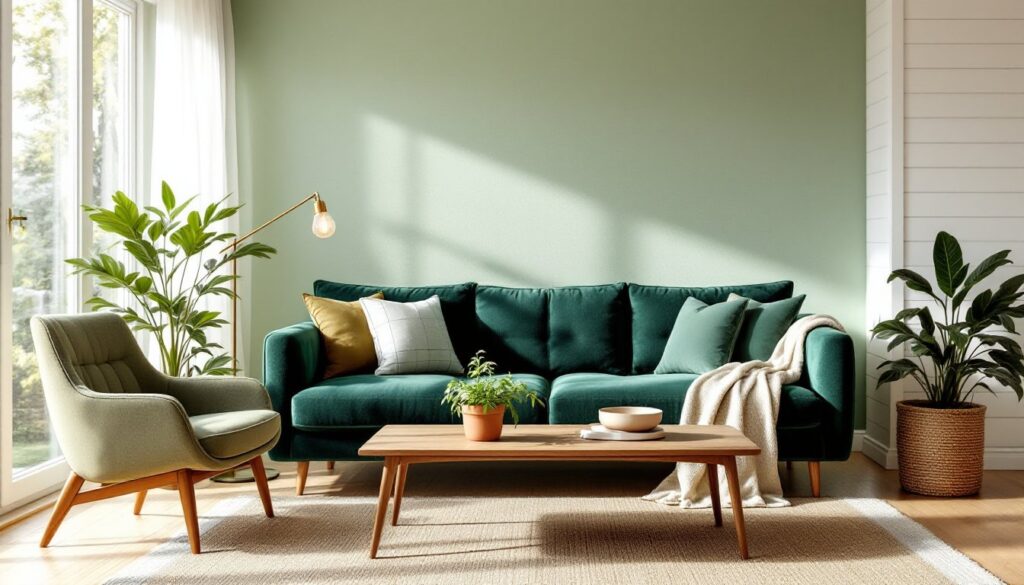
Painting walls is one approach, but green living room decor also works beautifully through upholstery and soft goods. A velvet sofa in emerald or forest green anchors a room without the permanence of paint. Velvet’s nap catches light differently depending on the angle, which gives the green visual movement throughout the day.
If a full sofa feels like too much commitment, try an accent chair in a bold green. A wingback or mid-century arm chair in hunter or bottle green pairs well with neutral sofas and adds a focal point without overwhelming the space. Look for performance fabrics if you’ve got kids or pets, many modern velvets and weaves now come with stain-resistant treatments that actually hold up.
Textiles are the easiest layer to swap out. Throw pillows, blankets, and area rugs in varying shades of green let you test the color without a long-term commitment. Mix patterns, a geometric pillow in sage alongside a solid emerald throw creates depth. Just keep the scale of the patterns varied: two large-scale prints in the same color family can compete rather than complement.
Curtains in a medium green (think moss or olive) soften windows and tie the room together, especially if you’ve got green elsewhere in the space. Choose a linen or cotton blend for a relaxed drape, or go with a heavier twill if you need blackout functionality. When selecting paint options for trim or built-ins, consider how they’ll frame your green textiles.
Complementary Color Palettes for Green Living Rooms
Green doesn’t work in a vacuum, it needs supporting colors to feel cohesive. The good news: green is surprisingly flexible.
Neutrals are the safest bet. Warm whites, beiges, and taupes let green take center stage without competing. If you’re using a bold green, balance it with plenty of off-white or cream in larger furniture pieces. Cooler grays work with blue-leaning greens like seafoam or teal, while warmer grays pair better with olive or sage.
Metallics add polish. Brass and gold bring warmth to green living rooms, especially deeper shades. Think brass picture frames, gold-finished sconces, or a hammered metal coffee table. If your green leans cool (mint, seafoam), stick with chrome, brushed nickel, or matte black for a more modern edge.
Terracotta and rust create an earthy, organic palette. Burnt orange pillows, a rust-colored rug, or terracotta planters play up green’s natural associations and add warmth without clashing. This combo works particularly well in bohemian or eclectic spaces.
Navy and charcoal ground green and add sophistication. A charcoal sofa with sage walls or navy curtains against an emerald accent wall creates contrast without feeling jarring. Just avoid going too dark across the board, balance deep tones with lighter accents to keep the room from feeling cave-like.
Blush pink and coral offer an unexpected but surprisingly effective pairing. Soft pinks temper the coolness of mint or seafoam and add a touch of warmth. This works best in spaces with lots of natural light, where the pink won’t read too sweet. Examples of green living room combinations show how layering tones creates depth.
Wood tones matter, too. Light oak, birch, and maple complement lighter greens, while walnut, mahogany, and darker stains enhance emerald and forest green. If your floors are a cool-toned gray laminate, lean into cooler greens rather than warm olives, which can clash. According to home styling guides, matching undertones between wood and wall color prevents the space from feeling disjointed.
Test your palette with samples before going all-in. Grab paint chips, fabric swatches, and even flooring samples, then lay them out in the actual room under different lighting conditions. What looks great under overhead LEDs at 2 p.m. might look completely different under warm Edison bulbs at 8 p.m.